

Finding the right agency is rarely a structured process. Businesses often rely on referrals, Google searches, and curated portfolios, making comparisons inconsistent and credibility difficult to verify.
Agency Discovery Time
↑ 64%
↑ 52%
Qualified Agency Leads
↑ 41%

The website we built

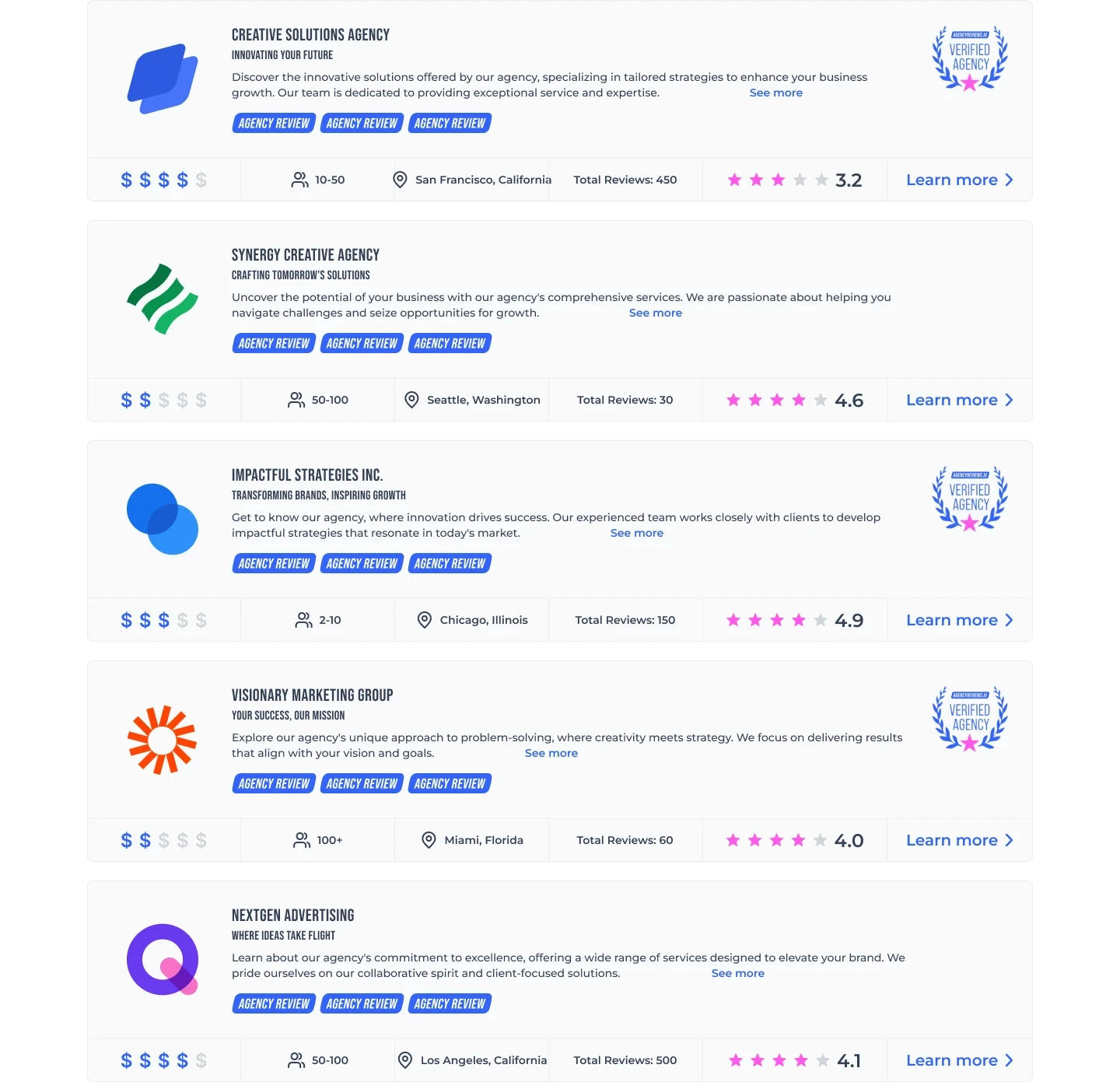

Agency Reviews was designed to bring structure, transparency, and comparability into agency discovery.
Role
Product Designer
Scope
Marketplace Platform
+ Agency Dashboard
Industry
All type of Agencies
Duration
6 Months

The Core Problem
Whenever a business searches for an agency, dozens of options appear claiming to be the best in the market. But beyond polished websites and bold promises, there’s no reliable way to know if an agency is truly the right fit until after working with them.

The Two-Sided Industry Gap
This is a two-sided problem where businesses struggle to confidently evaluate agencies, and agencies struggle to establish structured credibility in a competitive market.
Businesses

Too many agencies claim to be the best,
with no standardized way to compare them
No reliable proof of performance
before committing to work
Agencies

No neutral platform to showcase
expertise beyond self-marketing
Difficulty collecting and presenting
structured, trustworthy client reviews
Product Objective
Design a two-sided platform that:
Enables businesses to discover agencies through meaningful filters
Standardizes how agencies present information
Builds credibility through structured reviews
Provides agencies with a dedicated dashboard to manage their profile
The goal was not to create another directory.
It was to build an evaluation system.
Understanding the Two User Groups
1. Businesses Looking for Agencies
For businesses, the primary challenge was decision fatigue. Search results often surface dozens of agencies, each claiming expertise, but without a consistent way to compare them.
They need:
Clear comparability across agencies
Relevant filtering based on real criteria
Visible proof of performance before engagement
Design Approach
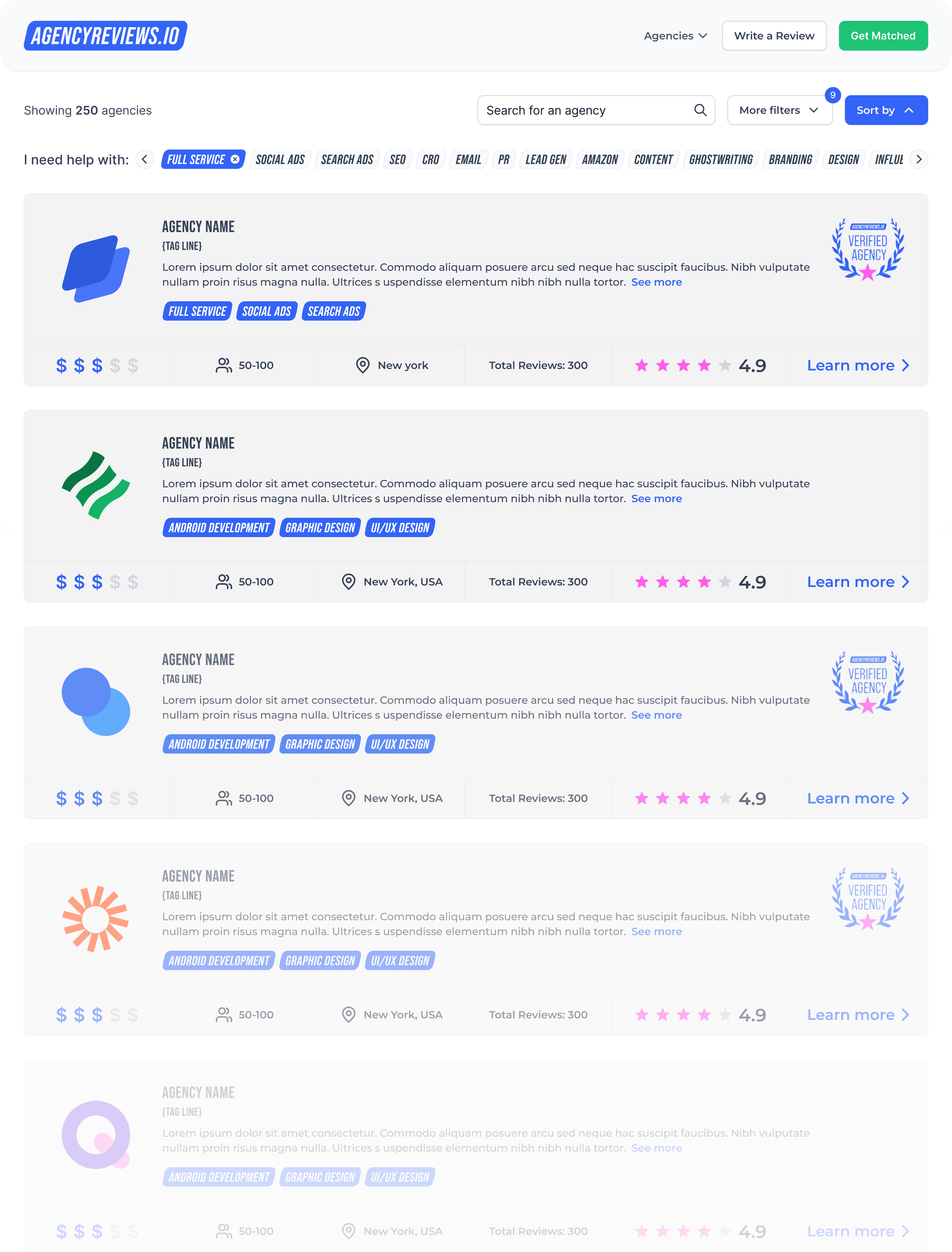
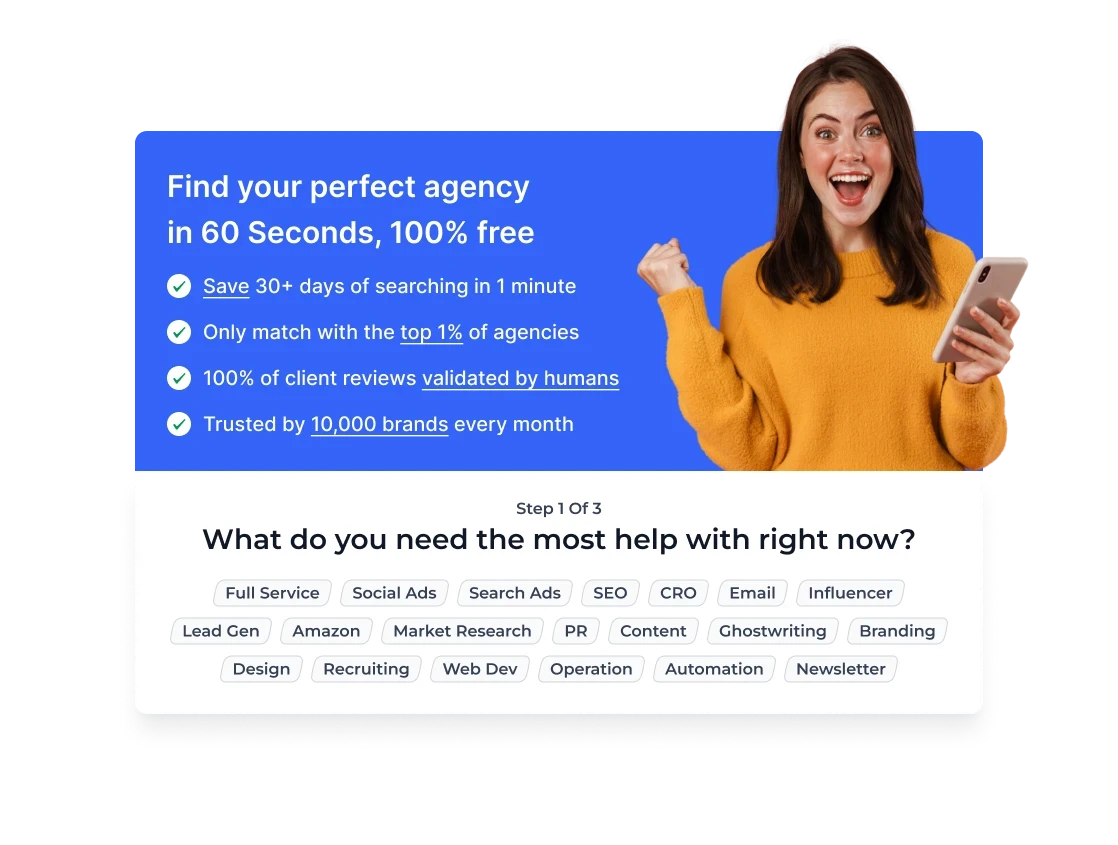
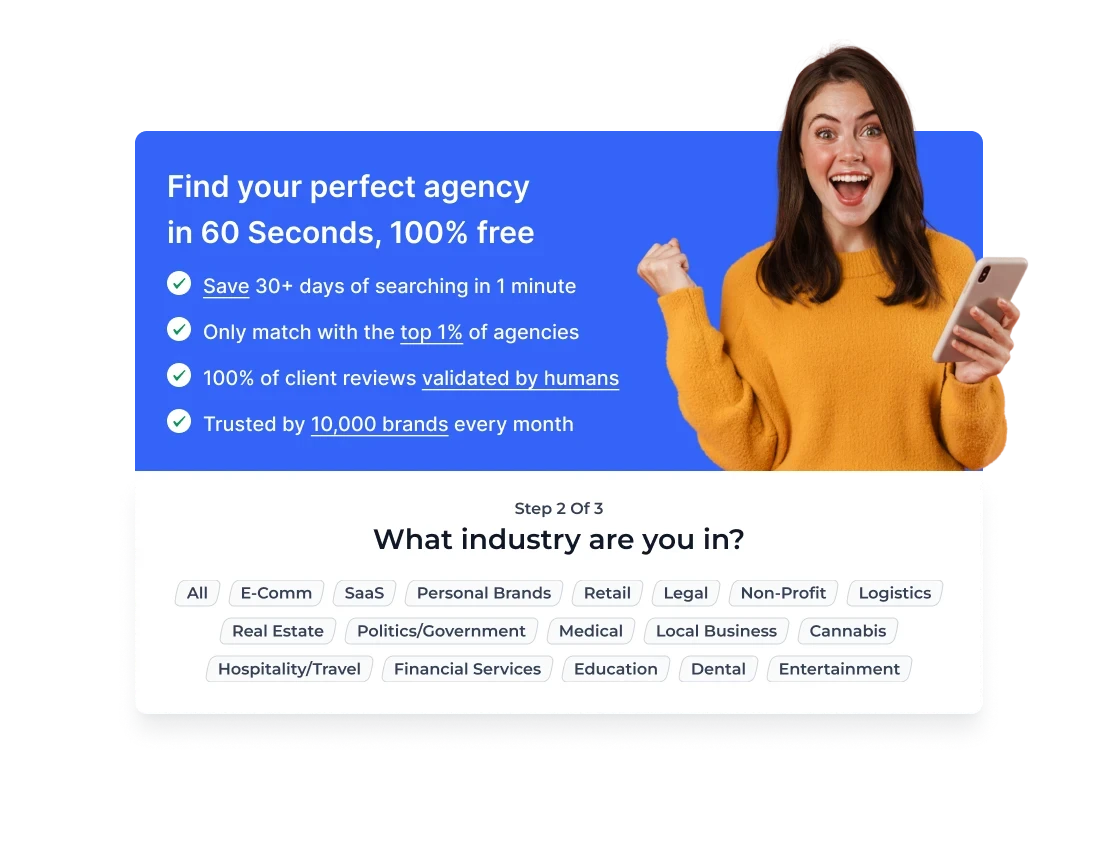
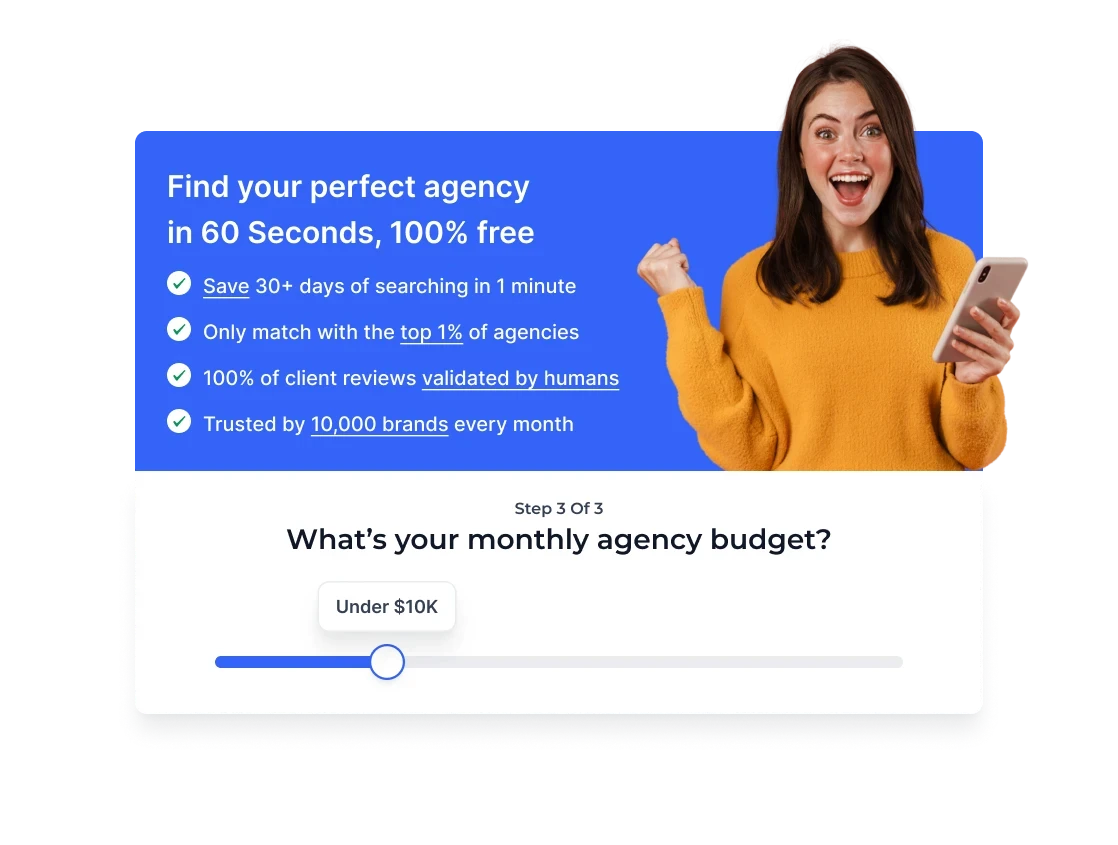
We introduced a structured discovery system built around meaningful filters such as ratings, domain expertise, service category, and budget range.
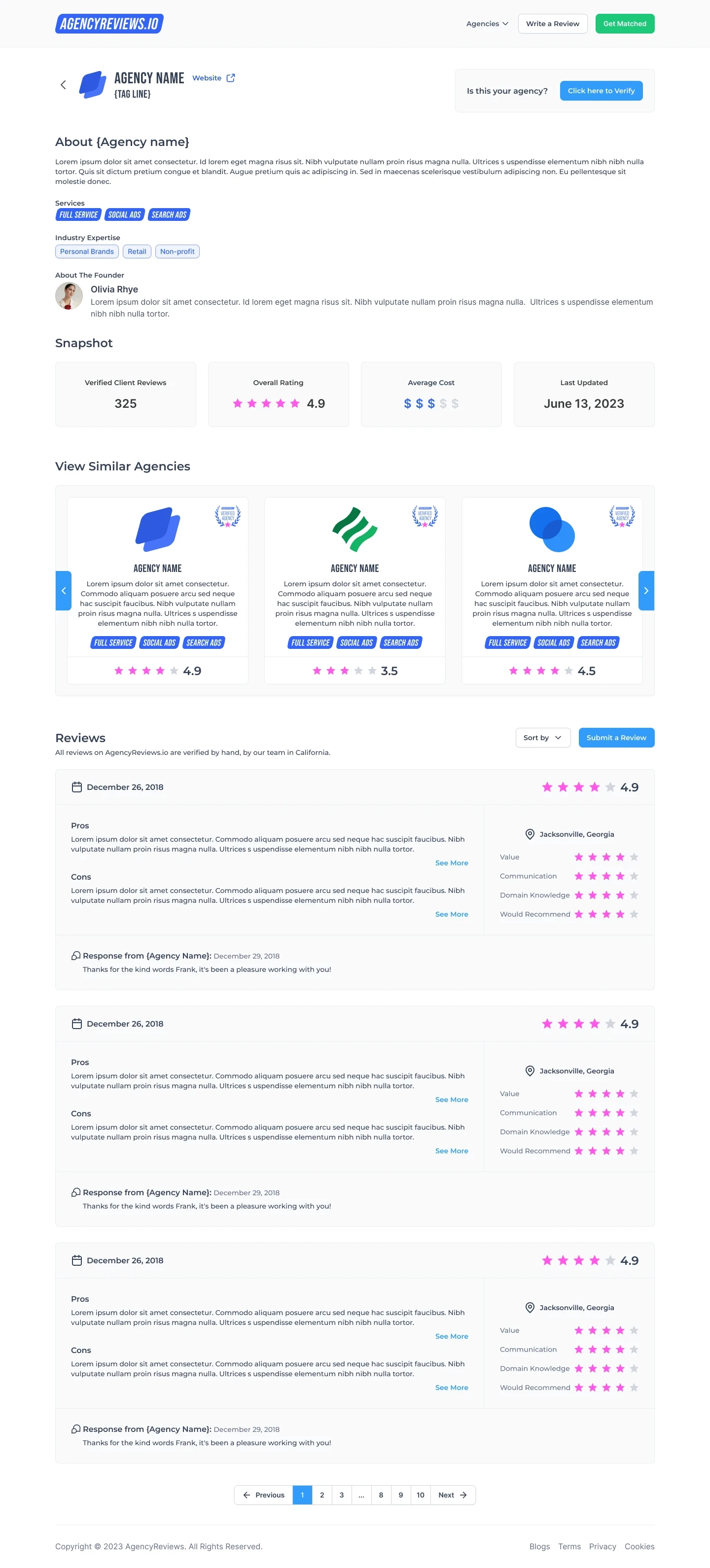
Agencies were presented in standardized listing cards, ensuring consistency in how information was displayed. Ratings and review counts were visible at the listing level, allowing users to evaluate options without excessive navigation.
The experience shifted discovery from passive browsing to intentional shortlisting.
2. Agencies
For agencies, visibility alone was not enough.
They needed a controlled and credible way to represent their work.
Design Approach
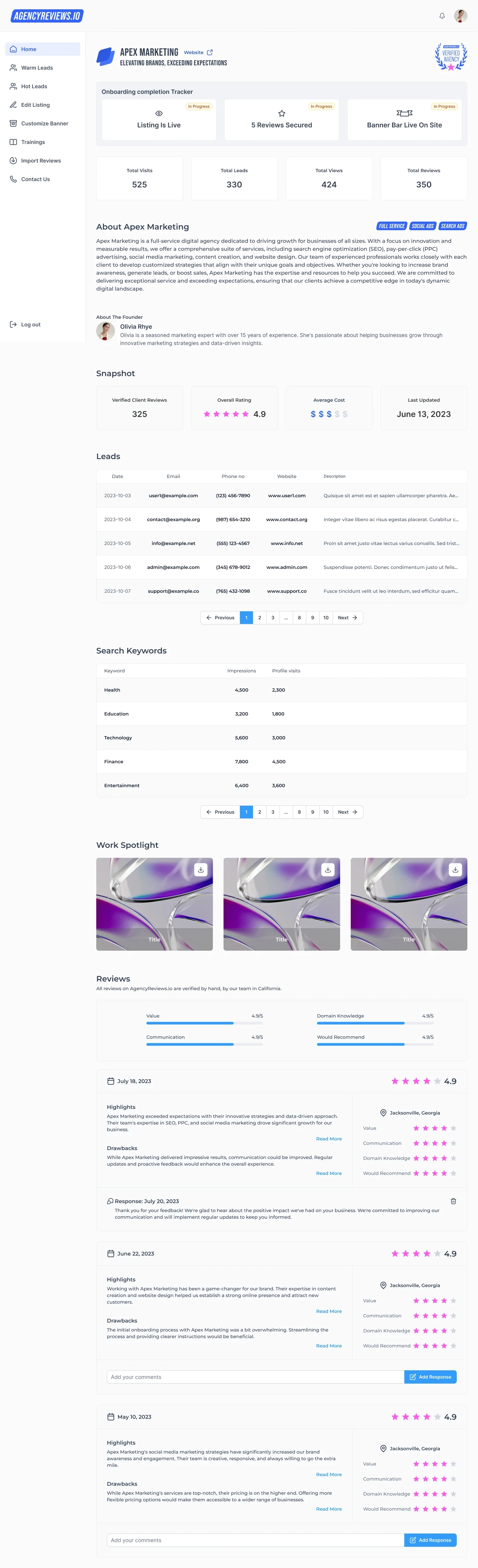
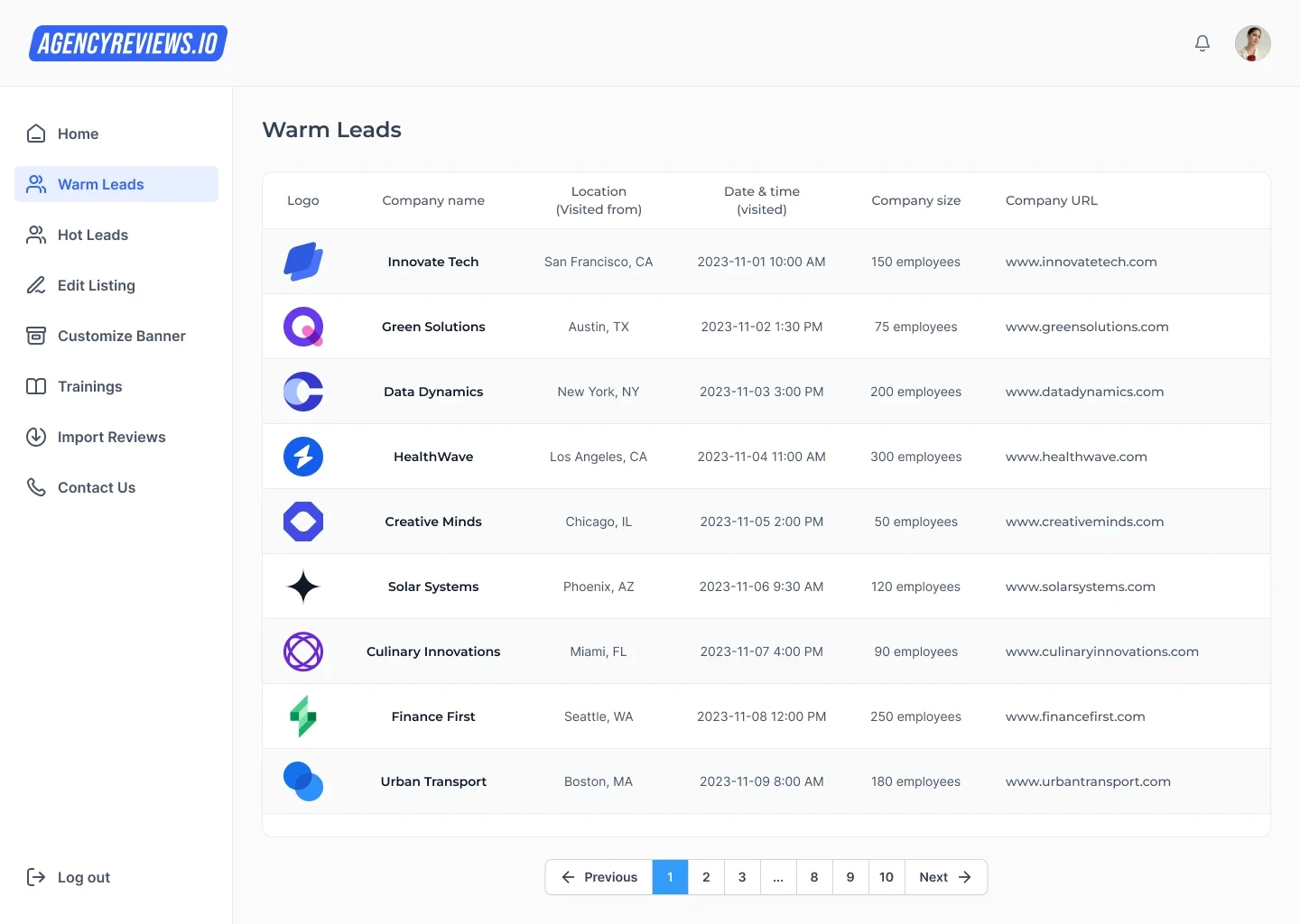
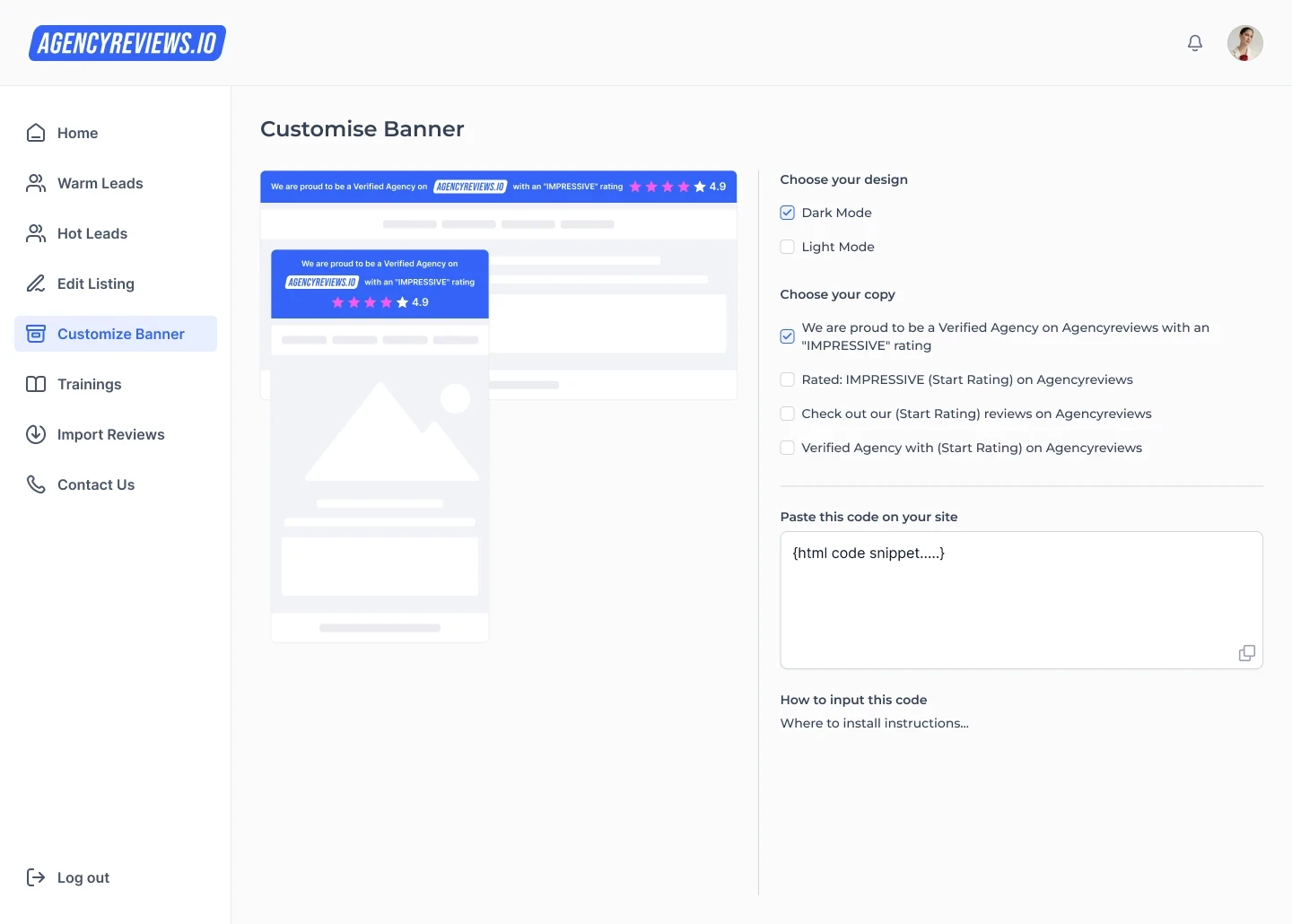
We designed a dedicated dashboard that allowed agencies to:
Build detailed public profiles
Define services and industry specializations
Showcase case studies
Manage and respond to reviews
Update operational information
This transformed agencies from static listings into active participants.
The dashboard functioned as a structured credibility management tool rather than a simple profile editor.
The Public Site
The Agency Dashboard
Learnings & Outcomes
Key Outcomes
Reduced friction in agency discovery through guided filtering and shortlisting.
Clear, structured agency profiles that improved comparability.
Increased credibility through visible ratings and review transparency.
Enabled agencies to actively manage their presence, leads, and reputation.
Built a balanced marketplace where trust is structured rather than assumed.
What I Learned
Agency discovery is not a visibility problem, it is a structure problem. When information is standardized, comparison becomes easier.
Businesses prefer guided decision-making over open-ended browsing. The quiz-style journey reduced overwhelm and improved clarity.
Trust signals must be visible and consistent. Ratings, reviews, and verification badges work only when surfaced clearly.
For agencies, dashboards are not just management tools, they are reputation control systems.
In two-sided platforms, both sides must gain value. If one side benefits more than the other, the system becomes unstable.
Thanks For Visiting